

CG Policy · 2025
In this section7 topics
Corporate Governance Policy
Has a Corporate Governance Policy
Yes
Policy Description
6.1 Overview of Corporate Governance Policy
The company adheres to and complies with laws, objectives, regulations, and resolutions of the company's shareholders' meetings. It will also adhere to and comply with the Principles of Good Corporate Governance of Listed Companies as prescribed by the Stock Exchange of Thailand ("SET"). This serves as a guideline for the company's operations, leading to operational efficiency that will enable the company to grow sustainably and foster transparency for investors, thereby building confidence among stakeholders in the company's business operations. The Board of Directors' Meeting resolved to approve the company's Good Corporate Governance Policy, covering 5 principles, on June 28, 2016. In 2018, the Board of Directors acknowledged the revision of the Good Corporate Governance (CG) Principles 2012 by the Stock Exchange of Thailand.
It is based on the Corporate Governance Code (CG Code) 2017 of the Securities and Exchange Commission (SEC) for creating sustainable value for the business. The Board of Directors' Meeting No. 4/2560 on August 9, 2017, and Meeting No. 2/2561 on February 21, 2018, studied and considered the suitability of adopting the Corporate Governance Code (CG Code) 2017 for the sustainable operation of the organization. Additionally, the Board of Directors acknowledged the Gap analysis information between the Corporate Governance Principles 2012, which is the company's current policy, and the Corporate Governance Code 2017, which revealed that the company already has consistent policies/practices. The company has disclosed various important policies in its Annual Registration Statement / Annual Report (Form 56-1 One Report).
Policy & Practices — Board of Directors
Introduction
Policies and Practices Related to the Board of Directors
1. Recognizing the Role and Responsibilities of the Board of Directors as an Organizational Leader that Creates Sustainable Value for the Company
The Board of Directors should understand its role and recognize its responsibility as a leader to oversee good corporate governance. This includes overseeing the business to create sustainable value for the company, setting goals, and allocating critical resources to achieve objectives. It involves monitoring, evaluating, and overseeing performance reporting. It ensures that the company conducts business ethically, respects the rights of and is responsible towards shareholders and stakeholders, and can adapt to changing factors. The Board has a duty to ensure that all directors and executives perform their duties with responsibility, due care, and integrity towards the organization, and that operations comply with the law.
Regulations and Resolutions of Shareholder Meetings
The Board should understand the scope of its duties and responsibilities and clearly define the scope and delegation of duties and responsibilities to the Managing Director and management. It should also monitor and ensure that the Managing Director and management perform their assigned duties.
2. Defining the Company's Primary Objectives and Goals for Sustainability
The Board of Directors should define or ensure that the company's primary objectives and goals are geared towards sustainability, aligning with value creation for the company, customers, stakeholders, and society as a whole, and that innovation and technology are appropriately utilized to achieve these objectives.
3. Strengthening an Effective Board of Directors
The Board of Directors should be responsible for defining and reviewing the structure of the Board, including its size, composition, and the appropriate proportion of independent directors necessary to guide the organization towards its stated objectives and key goals. It should also oversee that the nomination and selection process for directors is transparent and clear, to ensure the appointment of a Board of Directors whose qualifications align with the defined composition. When proposing director remuneration for shareholder approval, the Board should ensure that the structure and rates of remuneration are appropriate for the responsibilities and incentivize the Board to lead the organization in achieving both short-term and long-term goals. The Board should oversee the establishment of frameworks and mechanisms for supervising the policies and operations of subsidiaries and other significant investments, at a level appropriate for each entity, ensuring that subsidiaries and other invested entities have a clear and consistent understanding.
The Board should oversee that the Board and each director possess knowledge and understanding of their roles, the nature of the business, and relevant business laws. Furthermore, it should support all directors in continuously enhancing their skills and knowledge for performing their duties as directors.
4. Recruitment and Development of Senior Executives and Human Resource Management
The Board should ensure the recruitment and development of the Chief Executive Officer, senior executives, and other key positions within the company, ensuring they possess the necessary knowledge, skills, experience, and attributes to drive the organization towards its goals. Furthermore, it should ensure the establishment of a fair and appropriate compensation structure and performance evaluation system, which leads to the development of personnel's knowledge and abilities.
The Board should monitor and oversee the management and development of personnel to ensure they possess appropriate knowledge, skills, experience, and motivation, while also fostering a strong sense of awareness and a positive organizational culture. This includes ensuring an adequate number of personnel and establishing a Succession Plan for senior executives and other key positions within the company.
5. Promoting Innovation and Responsible Business Operations
The Board should prioritize and support innovation that creates value for the business, alongside generating benefits for customers or related parties, and demonstrating responsibility towards society and the environment. It should monitor and ensure that management conducts business in a socially and environmentally responsible manner, and that this is reflected in operational plans to ensure all parts of the organization operate in alignment with the company's objectives, key goals, and strategic plans. Furthermore, it should ensure that management allocates and manages resources efficiently and effectively, considering impacts and resource development.
6. Ensuring Appropriate Risk Management and Internal Control Systems
The Board of Directors should oversee to ensure that the company has an effective risk management and internal control system to achieve its objectives efficiently, and that it complies with relevant laws and standards. The Board must establish an Audit Committee that can perform its duties effectively and independently. Furthermore, the Board of Directors will monitor, oversee, and manage potential conflicts of interest that may arise between the company and management, the Board of Directors, or shareholders. This includes preventing the improper use of the company's assets, information, and opportunities, and engaging in inappropriate transactions with related parties. The Board should oversee the establishment of clear anti-corruption policies and practices, and ensure they are communicated at all levels of the organization and to external parties for effective implementation. The Board should ensure that the company has mechanisms for receiving complaints and taking action in cases of whistleblowing.
7. Maintaining Financial Credibility and Information Disclosure
The Board of Directors is responsible for ensuring that the financial reporting system and the disclosure of important information are accurate, sufficient, timely, and in compliance with relevant rules, standards, and practices.
Additionally, the Board of Directors is responsible for monitoring the adequacy of financial liquidity and debt-paying ability, and for establishing mechanisms to resolve financial problems should the company face or be likely to face such issues, or other mechanisms to resolve financial problems, all while considering the rights of the Board. The Board should oversee that management establishes a unit or assigns personnel responsible for investor relations to communicate with shareholders and other stakeholders, such as investors and analysts, in an appropriate, equitable, and timely manner, while also promoting the use of information technology for disseminating information.
8. Supporting Shareholder Engagement and Communication
The Board should ensure that shareholders participate in significant company decisions. It should ensure that shareholder meetings are conducted in an orderly, transparent, and efficient manner, facilitating shareholders' exercise of their rights. Furthermore, it should ensure that meeting resolutions are disclosed and minutes of shareholder meetings are prepared accurately and completely.
9. Require directors and executives to report their securities holdings upon assuming office and to report changes in securities holdings to the Company Secretary at least 1 day prior to the transaction. This is for the Board of Directors' awareness and for submitting reports to the SEC within 3 business days from the date of purchase/sale/transfer or receipt of securities via electronic channels as prescribed by the SEC. This enables the Company Secretary to report to the Board of Directors and disclose information in the annual report.
Has Policy & Guidelines for the Board
Yes
Board Guidelines
| Guideline | Other — Please Specify | Detail | Document Link | Page Number in Report |
|---|---|---|---|---|
| Nomination of Directors | Nomination and Appointment of Directors The Nomination and Remuneration Committee considers and selects individuals with suitable qualifications in terms of experience, knowledge, and abilities that will benefit the Company and are deemed appropriate for nomination as directors, independent directors, or audit committee members. of the Company, to be proposed to the Board of Directors' meeting and the Shareholders' meeting for consideration and appointment in accordance with the Company's Articles of Association. In the selection of new directors, the Company considers the composition of the Board based on the Board Skill Matrix approved by the Board of Directors to consider the qualifications, knowledge, skills, and experience required of the directors to be selected, to ensure that the composition of the Board is consistent with the business strategy of the business group. Furthermore, the Director Pool database is utilized in the consideration for selecting new directors. Nomination and Remuneration Committee Scope, Authority, Duties, and Responsibilities of the Nomination and Remuneration Committee 1. Define the qualifications and criteria for director nomination and consider selecting individuals with appropriate knowledge, experience, and expertise to propose for the Board of Directors' consideration and appointment and/or to propose to the Shareholders' meeting for further consideration and appointment (as the case may be). 2. Consider the independence of each independent director to ensure that the Company's independent directors meet all qualifications. 3. Consider the form and process for the development of the Chief Executive Officer to align with the Company's business and prevailing circumstances. 4. Consider the form and criteria for remuneration (whether in cash, securities, or other forms) for directors and the Chief Executive Officer to ensure they are appropriate, fair, and in compliance with relevant laws. 5. Consider the form and criteria for offering new securities or warrants to directors and employees to create long-term value for shareholders and genuinely retain high-quality personnel, while also being fair to shareholders. 6. Consider the performance evaluation criteria for the Chief Executive Officer and propose them to the Board of Directors for approval. 7. Review and propose amendments to the scope of authority, duties, and responsibilities of the Nomination Committee to align with prevailing circumstances and present them to the Board of Directors for approval. 8. Perform any other duties as assigned by the Board of Directors or as stipulated by the Board of Directors' policy. | https://www.tnrcondom.com/storage/download/charters/tnr-nomination-remunaration-committee-charter-th.pdf | 1-4 | |
| Determination of Director Remuneration | Remuneration Policy for Directors and Sub-committee Directors The remuneration for directors must be within the average range when compared to the same industry, taking into account the experience and responsibilities of the Board of Directors. Executives will receive remuneration in the form of salaries and annual bonuses, based on the performance of the Company as a primary factor. Furthermore, the combined annual remuneration of the Board of Directors and executives shall not be unusually high when compared to the average remuneration of directors and executives of companies in the same industry, with the utmost consideration for the best interests of the shareholders.
The Company has established a Nomination and Remuneration Committee to consider and determine the remuneration of Directors and the Chief Executive Officer, by setting appropriate and fair remuneration, and will propose it to the Board of Directors' meeting and/or the Shareholders' meeting for further approval (as the case may be). | |||
| Independence of the Board of Directors from the Management | Definition of Independent Director The Board of Directors of Thai Nippon Rubber Industry Public Company Limited ("the Company") has defined independent directors to be equivalent to the minimum requirements of the Securities and Exchange Commission and the Stock Exchange of Thailand, with details as follows: 1. Holds no more than 1% of the total voting shares of the Company, its parent company, subsidiaries, associated companies, or a legal entity that is a major shareholder or a controlling person of the Company, including shares held by related persons. 2. Is not or has not been a director involved in management, an employee, a salaried advisor, or a controlling person of the Company, its parent company, subsidiaries, associated companies, fellow subsidiaries, major shareholders, or controlling persons of the Company, unless such characteristics have ceased for at least 2 years. 3. Has no blood relationship or relationship by registration as a parent, spouse, sibling, or child, including the spouse of a child, of other directors, executives, major shareholders, controlling persons, or persons to be nominated as directors, executives, or controlling persons of the Company or its subsidiaries. 4. Has no or has not had a business relationship with the Company, its parent company, subsidiaries, associated companies, major shareholders, or controlling persons of the Company in a manner that may impede their independent judgment, and is not or has not been a significant shareholder or controlling person of a party having a business relationship with the Company, its parent company, subsidiaries, associated companies, major shareholders, or controlling persons of the Company, unless such characteristics have ceased for at least 2 years. Such business relationships as described in the first paragraph include normal commercial transactions for business operations, leasing or subleasing of real estate, transactions related to assets or services, or providing or receiving financial assistance through borrowing or lending, guarantees, providing assets as collateral for debts, including other similar behaviors, which result in the Company or the counterparty having a debt obligation to pay to the other party of 3% or more of the Company's net tangible assets, or 20 million Baht or more, whichever amount is lower. In considering such debt obligations, debt incurred within 1 year prior to the date of the business relationship with the same person shall be included. 5. Is not or has not been an auditor of the Company, its parent company, subsidiaries, associated companies, major shareholders, or controlling persons of the Company, and is not a significant shareholder, controlling person, or partner of an audit firm to which an auditor of the Company, its parent company, subsidiaries, associated companies, major shareholders, or controlling persons of the Company belongs, unless such characteristics have ceased for at least 2 years. 6. Is not or has not been a professional service provider, including providing legal or financial advisory services, receiving service fees exceeding 2 million Baht per year from the Company, its parent company, subsidiaries, associated companies, major shareholders, or controlling persons of the Company, and is not a significant shareholder, controlling person, or partner of such professional service provider, unless such characteristics have ceased for at least 2 years. 7. Is not a director appointed to represent a director of the Company, a major shareholder, or a shareholder who is a related person of a major shareholder. 8. Does not operate a similar business that is in significant competition with the business of the Company or its subsidiaries, or Not a significant partner in a partnership, or a director involved in management, an employee, a salaried advisor, or holding more than 1% of the total voting shares of another company that operates a similar business and is in significant competition with the business of the Company or its subsidiaries. 9. Has no other characteristics that prevent them from providing independent opinions regarding the Company's operations. After being appointed as an independent director of the Company, the independent director may be assigned by the Company's Board of Directors to make decisions regarding the operations of the Company, its parent company, subsidiaries, associated companies, fellow subsidiaries, major shareholders, or controlling persons of the Company, with decisions made in the form of a collective decision. | |||
| Director Development | Development of Directors and Executives The Board of Directors has a policy to promote and facilitate training and knowledge provision to those involved in the company's corporate governance system, such as directors, audit committee members, executives, and the company secretary, among others, to ensure continuous improvement in performance. Such training and knowledge provision may be conducted internally within the company or by utilizing external institutions.
In the event of a change in directors or the appointment of new directors, the management will provide documents and information beneficial for the new directors' performance of duties, as well as introduce the company's business nature and operational guidelines to the new directors.
The Board of Directors will arrange for job rotation based on the aptitudes of executives and employees, primarily considering the suitability of the work and time. The Managing Director will determine the timeframe and evaluate the performance results to serve as a development and succession plan for the company.
This is to develop executives and employees to enhance their knowledge and capabilities in their work and to enable them to perform interchangeable tasks. | |||
| Board Performance Evaluation | Evaluation of Sub-Committee Performance
Criteria The Company's Board of Directors arranges for the annual performance evaluation of each sub-committee, at least once a year, using the self-assessment guidelines for directors from the Stock Exchange of Thailand. These guidelines cover topics such as the appropriate structure and qualifications of each sub-committee, sub-committee meetings, and the roles, duties, and responsibilities of each sub-committee. Sufficient importance has been given, and time has been spent on considering, reviewing, and adhering to various matters.
Steps The Company conducts an annual performance evaluation for each sub-committee to assess their operations over the past year. The Company Secretary will send the evaluation form to the Chairman of the Executive Board to evaluate the performance of each sub-committee. The evaluation results will then be discussed at the Board meeting. The performance evaluation of the sub-committees includes the Audit Committee, the Nomination, Remuneration, and Corporate Governance Committee, and the Risk Management Committee. It was found that the performance evaluation results for all sub-committees in 2025 were satisfactory. | |||
| Corporate Governance of Subsidiaries and Associated Companies | Company's Policy for Investment and Management in Subsidiaries and Associated Companies The Company has a policy for investment and management in its subsidiaries and associated companies. It will invest in businesses that are related, similar, or provide benefits and support the Company's operations, to enhance the Company's stability and performance. The Company will consider the investment proportion, expected profits, potential risks, and the Company's financial status before deciding to invest in various projects. Such investment approvals must be considered by the Board of Directors' meeting and/or the Shareholders' meeting, in accordance with the defined scope of approval authority.
Furthermore, in supervising the operations of subsidiaries and associated companies, the Company will appoint its representatives, who possess appropriate qualifications and experience relevant to the businesses in which the Company has invested, to serve as directors in such subsidiaries and associated companies. These representatives may include the Chairman, Chief Executive Officer, directors, senior executives, or any other personnel of the Company who have no conflicts of interest with the businesses of those subsidiaries and associated companies. To enable the Company to control and oversee the business and operations of its subsidiaries and associated companies as if they were integral units of the Company, the Company stipulates that its representatives must manage the businesses of the subsidiaries and associated companies in accordance with the regulations and rules set forth in the articles of association and relevant laws governing the operations of such subsidiaries and/or associated companies. Additionally, the Company will appoint representatives to serve as directors in such subsidiaries and associated companies in proportion to the Company's shareholding and/or based on mutual agreements in the case of associated companies.
The Company will closely monitor the financial performance and operations of its subsidiaries and associated companies, including overseeing the collection of data and maintenance of accounting records for subsidiaries and associated companies for audit purposes.
The Group's policy for investment and management in subsidiaries and associated companies has been effective since March 11, 2016. It was acknowledged by a resolution of the Board of Directors' meeting on June 28, 2016, onwards. In 2025, the Company will continue to adhere to the original policy without any changes. | |||
| Other guidelines regarding the board of directors | Board of Directors' Charter | The Board of Directors plays a crucial role in overseeing the company's management, including setting the company's direction, policies, and business strategies for the utmost benefit of the company and its shareholders, and monitoring the performance of various sub-committees of the company. Furthermore, the Board of Directors also possesses powers, duties, and responsibilities as stipulated by law, regulations, objectives, and resolutions of the company's shareholders' meetings. Further details are specified in the Board of Directors' Charter, available on the company's website. | https://www.tnrcondom.com/en/corporate-governance/charters | 1-6 |
| Other guidelines regarding the board of directors | Audit Committee Charter | The Audit Committee is an independent committee established to support the Board of Directors in overseeing and reviewing operations, internal controls, and compliance with relevant laws, as well as the preparation of financial reports. This is to ensure that the company's operations and disclosure of information are transparent and reliable. Further details are specified in the Audit Committee Charter on the company's website. | https://www.tnrcondom.com/storage/download/charters/20260216-tnr-audit-committee-th.pdf | 1-5 |
| Other guidelines regarding the board of directors | Charter of the Nomination and Remuneration Committee | The Nomination and Remuneration Committee (“ Nomination Committee ”) was established to recruit qualified individuals to serve as directors and senior executives of the company, as well as to consider the structure and criteria for remuneration of directors and senior executives, in order to propose recommendations to the Board of Directors for approval or to present to the Shareholders' Meeting for further approval (as the case may be). Further details are specified in the Charter of the Nomination and Remuneration Committee on the company's website. | https://www.tnrcondom.com/storage/download/charters/20260216-tnr-nomination-remunaration-committee-charter-th.pdf | 1-4 |
| Other guidelines regarding the board of directors | Executive Committee Charter | The Executive Committee is established to support the Board of Directors in managing the company's affairs in accordance with policies, plans, regulations, and any directives, as well as the objectives set within the framework assigned by the Board of Directors. Further details are specified in the charter of the Executive Compensation Committee on the company's website. | https://www.tnrcondom.com/storage/download/charters/20260216-tnr-executive-committee-charter-th.pdf | 1-4 |
Code of Conduct
Has a Business Code of Conduct
Yes
Code of Conduct Description
The Company intends to conduct its business transparently, ethically, and responsibly towards stakeholders, society, and the environment. The Company has established written guidelines for the Board of Directors, executives, and employees to adhere to as principles for their operations, as follows:
-
Code of Conduct regarding Responsibility to Shareholders
-
Code of Conduct regarding Customer Relationships
-
Code of Conduct regarding Relationships with Business Partners, Competitors, and Creditors
-
Code of Conduct regarding Responsibility to Employees
-
Code of Conduct regarding Social and Environmental Responsibility
The Board of Directors recognizes the rights of individuals as stipulated by law and has established relevant policies to promote ethical and socially responsible business operations, such as:
-
Anti-Corruption Policy with Clear Guidelines
-
Conflict of Interest Prevention Policy
-
Insider Trading Policy to prevent direct or indirect personal or third-party gain.
-
Personal Data Protection Policy
The Company has published these policies on its website to ensure transparent access and awareness for all stakeholders.
Business Ethics Principles
Thai Nippon Rubber Industry Public Company Limited ( “The Company” ) has business ethics principles that the Company's executives and employees must adhere to as guidelines for performing their duties as representatives of the Company, as follows:
|
Shareholders |
The Company will conduct business with transparency and efficiency, striving to achieve good performance and stable growth to maximize long-term benefits for shareholders, as well as disclose information transparently and reliably to shareholders. |
|
Employees |
The Company will treat all employees equally and fairly, providing appropriate compensation based on each employee's knowledge and abilities. It will also maintain a working environment that prioritizes quality of life and safety at work, strictly adhering to labor laws. Furthermore, the Company consistently emphasizes the development of employees' skills, knowledge, abilities, and potential through activities such as training, seminars, and workshops, providing equal opportunities to all employees and striving to incentivize highly skilled employees to remain with the Company for organizational development. It has also established guidelines to combat corruption and instilled in all employees the importance of complying with relevant laws and regulations, such as strictly prohibiting the use of inside information. The Company respects the privacy of its employees and will not disclose personal information such as salaries, medical history, and family history to external parties or unrelated individuals, unless such disclosure is required by law or with the consent of the employees concerned. |
|
Business Partners |
The Company has a process for selecting business partners by allowing them to compete based on equal information and selecting them fairly under the Company's partner evaluation and selection criteria. Furthermore, the Company has developed appropriate and fair contract templates for all parties and established a monitoring system to ensure full compliance with contract terms and to prevent fraud and misconduct at all stages of the procurement process. The Company purchases goods from business partners according to commercial terms and strictly adheres to its contractual obligations with them. |
|
Customers |
The Company is responsible to customers by maintaining the quality and standards of its products, as well as fully and comprehensively responding to customer needs, with the aim of building long-term customer satisfaction. Furthermore, the Company considers the hygiene and health of customers when consuming its products and provides accurate and complete product information to customers, without exaggerating advertisements that could mislead customers. The Company also provides channels for customers to report issues with unsuitable products so that the Company can quickly prevent and resolve problems related to its products, as well as maintain customer confidentiality and not use it for its own benefit or the undue benefit of related parties. |
|
Creditors |
The Company will primarily adhere to the terms and conditions of its contracts with creditors, including the repayment of principal, interest, and the management of various collaterals under the relevant contracts. |
|
Competitors |
The Company operates within a framework of healthy competition, adhering to ethical standards and legal boundaries. It supports and promotes policies of free and fair competition, without violating or illicitly obtaining trade secrets from competitors through fraudulent means. |
|
Society and the Public |
The Company cares for and prioritizes the safety of society, the environment, and the quality of life of individuals involved in the Company's operations. It promotes environmental and social awareness and responsibility among its employees and ensures strict compliance with all relevant laws and regulations. Furthermore, the Company strives to participate in various activities that create and preserve the environment and society. |
Code of Conduct Link
https://www.tnrcondom.com/storage/download/code-of-conducts/20211102-code-of-conduct-th.pdf
Page Number in Report
1-3
Code of Conduct Practices
| Guideline | Detail | Document Link | Page Number in Report | |||||||||||
|---|---|---|---|---|---|---|---|---|---|---|---|---|---|---|
| Prevention of Misuse of Inside Information | Prevention of Conflicts of Interest The Company has a policy to prudently eliminate conflicts of interest with integrity, rationality, and independence under a sound ethical framework, primarily for the benefit of the Company. It requires individuals involved in or related to a transaction under consideration to disclose information about their interests and those of related parties to the Company, and they must not participate in the consideration or have approval authority for such transactions. Furthermore, the Company has a policy for related party transactions and transactions with conflicts of interest that complies with the law, as well as the regulations of the Securities and Exchange Commission, the Capital Market Supervisory Board, and the Stock Exchange of Thailand. The Board of Directors oversees the use of inside information in compliance with laws and good corporate governance principles. This is stipulated in writing in the insider trading policy to prevent the use of information for trading the Company's securities or seeking undue benefits. The key points are summarized as follows: 1. Directors, executives, and employees who have access to the Company's inside information are required to refrain from trading the Company's securities for at least 1 month prior to the public disclosure of information and for at least 24 hours after the public disclosure of information before they can conduct the aforementioned transactions. Furthermore, they are prohibited from disclosing such material information to any other person by any means. In the past year 2025, it was not found that any directors, executives, or relevant employees traded securities during the Company's designated blackout period, which was correctly observed in accordance with the policy. 2. The Company Secretary's Office has sent an email to relevant individuals to notify and request cooperation from directors, executives, and relevant employees, prohibiting directors, executives, employees, and their close associates from buying, selling, or transferring the Company's securities at least 1 month prior to the reporting of operating results to the Stock Exchange of Thailand each quarter (Blackout Period). A form has also been prepared for acknowledgment of the securities trading blackout period. Policy on Preventing Conflicts of Interest The Company has established a policy on preventing conflicts of interest based on the principle that any decision in conducting business activities must be for the utmost benefit of the Company and its shareholders, and actions that may lead to conflicts of interest should be avoided. This means any action where a person involved in or having an interest in a transaction receives a benefit or suffers a detriment, whether directly or indirectly, from the Company or its subsidiary entering into such a transaction. It requires individuals involved in or having an interest in a transaction under consideration to inform the Company of their relationship or interest in such transaction and must not participate in the consideration or have the authority to approve such transactions. The policy on preventing conflicts of interest has been effective since March 11, 2016. Company Policy on Related Party Transactions In conducting related party transactions of the Company and its subsidiaries, to establish standards for the operations of the Company and its subsidiaries, the Company deems it appropriate to consider related party transactions of the Company and its subsidiaries to be in accordance with the practices under the Securities and Exchange Act. Details are as follows: Related party transactions of the Company and its subsidiaries shall comply with the criteria of the Securities and Exchange Act and the Capital Market Supervisory Board Notification No. TorJor. 21/2551 regarding rules for related party transactions, together with the Notification of the Board of Governors of the Stock Exchange of Thailand regarding disclosure of information and operations of listed companies concerning related party transactions, as well as various regulations of the Securities and Exchange Commission and the Stock Exchange of Thailand. Furthermore, compliance with the requirements for disclosing related party transactions in the notes to the financial statements audited by the Company's auditor and in the annual registration statement/annual report (56-1 One Report) is also required. In cases where the law requires the Company to obtain approval from the Board of Directors' meeting or the shareholders' meeting before entering into any related party transaction, the Company will arrange for the Audit Committee to provide an opinion on such transaction. The Audit Committee's opinion will then be presented to the Board of Directors' meeting or the shareholders' meeting, as the case may be, to ensure that the proposed transaction is for the utmost benefit of the Company. In cases where related party transactions of the Company and its subsidiaries involve individuals who may have a conflict of interest, a vested interest, or a potential future conflict of interest, the Audit Committee shall provide opinions on the necessity of entering into such transactions and the appropriateness of their prices. This consideration will be based on various conditions to ensure they align with normal business practices in the industry and will involve comparison with prices from third parties or market prices. If the Audit Committee lacks expertise in considering potential related party transactions, the Company will arrange for an independent expert or the Company's auditor to provide an opinion on such transactions. This opinion will be used to support the decision-making of the Board of Directors, the Audit Committee, or shareholders, as the case may be. Directors with a vested interest shall not have the right to vote on such transactions. Furthermore, related party transactions will be disclosed in the notes to the financial statements audited or reviewed by the Company's auditor. In principle, management may approve such transactions if those actions involve commercial terms similar to what a reasonable person would undertake with a general counterparty under similar circumstances, with bargaining power similar to what a reasonable person would exercise with a general counterparty in a general manner, and with bargaining power free from the influence of their status as a director, executive, or related person. The Company must prepare a summary report of such transactions for reporting at the next Board of Directors' meeting. In 2025, the Company engaged in related party transactions. These transactions complied with the criteria of the related party transaction policy and the regulations set by the SEC and the Stock Exchange. The Company's policy on related party transactions has been effective since March 11, 2016. | https://www.tnrcondom.com/storage/download/corporate-governance/corporate-governance-policy-th.pdf | 8 | |||||||||||
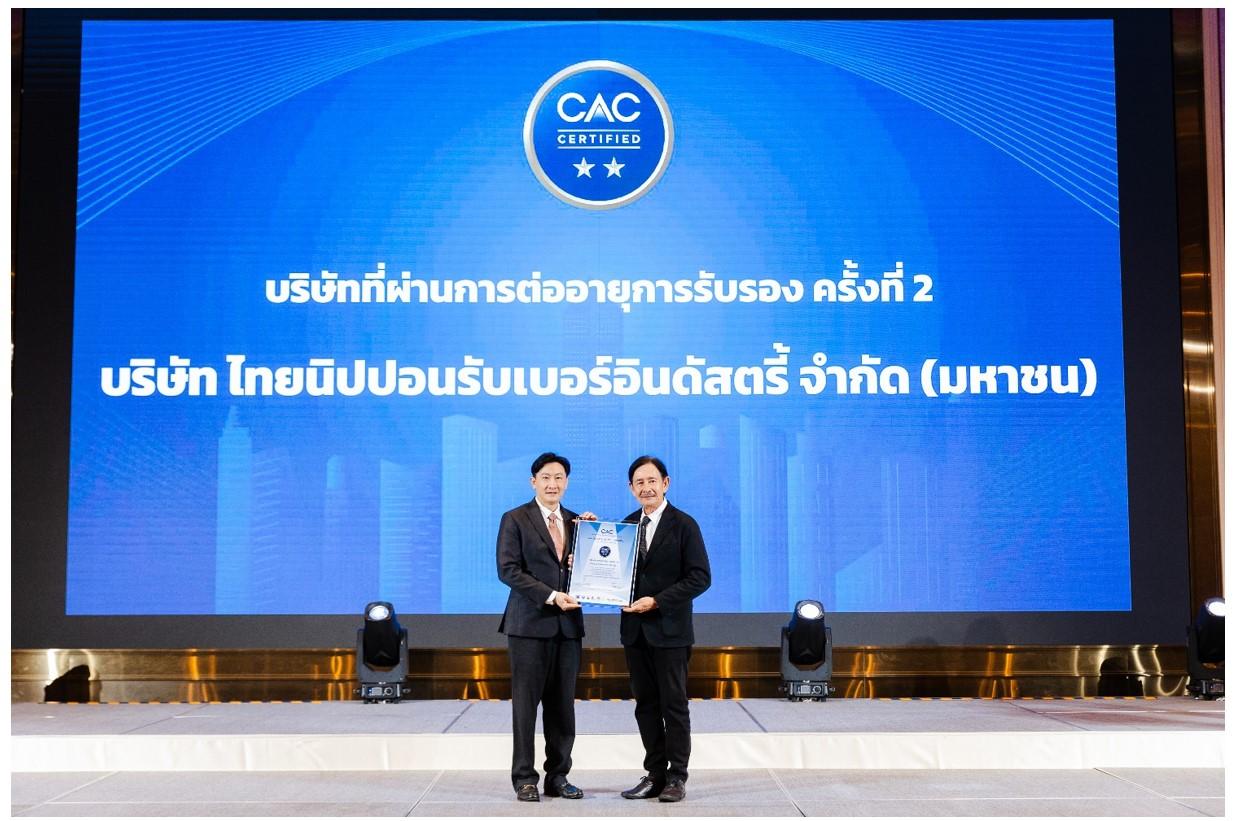
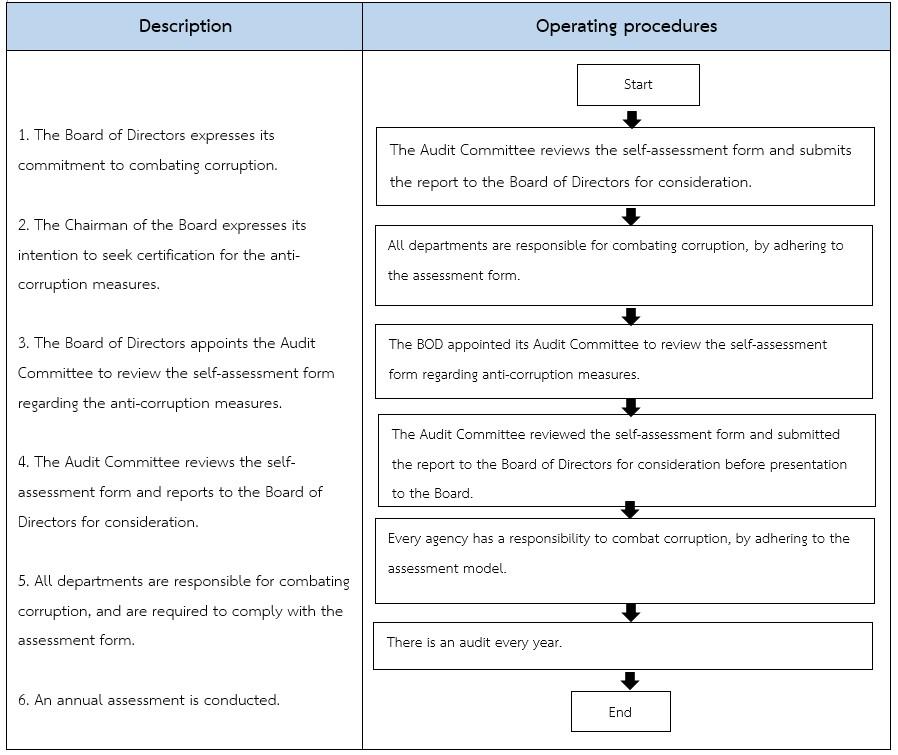
| Anti-corruption | Anti-Corruption Anti-Corruption The Company is committed to transparency, ethics, and operating under corporate governance principles, complying with laws related to preventing and combating corruption, and giving or receiving bribes with government officials or private sector entities. The Company has established an organizational structure with clear division of duties, responsibilities, work processes, and reporting lines in each department to ensure appropriate checks and balances and rigorous mutual oversight. The Company, by a resolution of its Board of Directors, declared its intention to join the Thailand's Private Sector Collective Action Coalition Against Corruption (CAC) project, and its participation was accepted on October 8, 2017. The Company proceeded with the project's certification process and submitted supporting documents regarding its business operating policies, operational procedures, and internal control systems. The CAC Committee resolved to certify the Company as a member of the Thai Private Sector Collective Action Coalition Against Corruption on February 4, 2019. This certification is valid for 3 years from the date of the resolution. The Company has incorporated this commitment into the code of conduct for directors, executives, and employees, as well as into the Company's good corporate governance guidelines. As of December 30, 2021, the Company successfully renewed its certification for the first time. In 2025, the Company applied for the renewal of its certification for participation in the Thailand’s Private Sector Collective Action Coalition Against Corruption (CAC) and received its second renewal. This reflects the Company's continuous commitment to conducting business with transparency, good governance, and combating all forms of corruption. The Company requires all its personnel to acknowledge, understand, and comply with the anti-corruption policy and good practices.
Anti-Corruption Policy The Company and its subsidiaries prioritize anti-corruption and anti-bribery for business benefits. The Board of Directors resolved to approve the Company's participation in the Thai Private Sector Collective Action Coalition Against Corruption (CAC). The Company and its subsidiaries have incorporated this commitment into the code of conduct for directors, executives, and employees, as well as into the good corporate governance guidelines for the Company and its subsidiaries. The Company and its subsidiaries publish their anti-corruption policy, including manuals and guidelines, on the Company's website to ensure that all Company personnel are aware of, understand, and comply with the anti-corruption policy and the following good practices: Anti-Corruption Policy All directors, executives, and employees of the Company are prohibited from accepting any form of corruption, directly or indirectly, including receiving goods, gifts, hospitality, solicitations, donations, giving or receiving bribes, giving or receiving political support or assistance, conflicts of interest, facilitation payments, employment of government officials and state officials, and any other benefits for themselves or Company personnel. This prohibition extends to employees, partners, customers, and all stakeholder groups, both domestic and international. The anti-corruption policy shall be reviewed at least once a year. Definitions Corruption Refers to bribery in any form, by offering a promise, giving, pledging, demanding, or receiving (in monetary/asset form) or any other inappropriate benefit to government officials, state agencies, private entities, partners, customers, and all stakeholder groups, whether directly or indirectly, or engaging in any behavior that suggests corruption in all forms, to induce such individuals to act or refrain from acting in a manner that secures or maintains business or recommends business to the Company specifically, or to obtain or maintain any other inappropriate business benefits, unless permitted by law, regulations, announcements, rules, local customs, or trade practices. Bribery Giving and Receiving Gifts, Hospitality, and Reception Services (Gift and Hospitality) Refers to giving gifts, hospitality, reception services, covering travel expenses or other expenses for entertaining clients, partners, business associates, or other organizations, which does not affect the Company's performance but complies with relevant laws. Such acts are made in the Company's name, not in the name of an employee, and are appropriate for occasions such as New Year, Songkran, Chinese New Year, etc., which are considered normal customs and are conducted openly. This also includes accepting such items due to unavoidable necessity, to maintain good business relationships, or for any other reason. Giving and Receiving Monetary and Non-Monetary Support (Sponsorship) Refers to the Company providing or requesting monetary and non-monetary support (e.g., goods, gift vouchers, etc.) for branding, enhancing the Company's reputation, and strengthening business relationships. Such support must be transparent, lawful, and not used for corruption. Donations Refers to donating money, goods, or any other benefits to any established individual or legal entity, such as associations, foundations, public organizations, temples, hospitals, educational institutions, or organizations that benefit society, with the objective of providing public benefit to society without expecting returns or benefits from the supporting organization. Accepting Donations Refers to receiving cash, goods, or assets to be donated to charitable organizations. Political Assistance (Political Contributions) Refers to giving or offering valuable items such as money, goods, or other benefits to politicians, political parties, or individuals, as well as political activities, whether directly or indirectly. Conflict of Interest Refers to a situation or act where a director, executive, or employee experiences a conflict between personal interests and the Company's interests, affecting decision-making or the impartial performance of duties in their responsible position. This can take various forms, even becoming common practice without being perceived as wrongdoing, such as working for another entity that conflicts with the original one, or conflicts of interest arising from changing workplaces. Facilitation Payments Refers to small payments made informally to government officials, solely to ensure that government officials follow procedures or to expedite processes, where such processes do not require the discretion of the government official and are part of the official's duty, as well as being a right that legal entities are already entitled to by law. Employment of Government Officials/State Officials (Revolving Door) This refers to individuals from the public sector, or former government officials/politicians/advisors to government agencies, moving to work in the private sector, or individuals from the private sector moving to work on policy in the public sector. They may leverage relationships or inside information to benefit private companies or create conflicts of interest in the performance of duties, leading to corruption risks in terms of personal conflicts of interest for individuals with roles in both organizations. This can cause government officials to perform their regulatory duties impartially or private sector personnel to attempt to push government policies that benefit their own organizations. Guidelines for Anti-Corruption Operations Directors, executives, employees at all levels, and relevant parties must strictly adhere to the anti-corruption policy and business ethics. They must not be involved in corruption, whether directly or indirectly. The following operational guidelines are established:
All directors, executives, and employees must prioritize collective interests over personal interests and perform their duties solely for the benefit of the Company to prevent conflicts of interest. This includes: Perform their duties with transparency, which includes being prepared for audits of their performance by the Company or relevant agencies at all times. The payment or provision of valuable items or services, such as gifts, entertainment, or travel, to government officials, foreign governments, and related parties, whether directly or indirectly, to induce them to act or refrain from acting in any manner that is illegal, is highly improper. This also includes not encouraging or participating in such actions by others. Procurement must follow the Company's regulations, be transparent, and auditable. Expenses for business hospitality and other expenditures related to fulfilling business contracts are permissible according to established regulations, but must be reasonable and auditable. To ensure that anti-corruption measures are implemented throughout the organization, the Company must establish adequate supporting processes to prevent corruption, including processes for reviewing sales and marketing, procurement, human resource management, finance, and accounting. Internal operational regulations must include comprehensive and effective internal controls to prevent corruption. Anti-Corruption Policy Manual and Guidelines
Anti-Corruption Operational Procedures
To prevent potential corruption risks to the Company, directors, executives, and employees of
Receiving Gifts or Other Benefits (Gift and Hospitality)
Giving Gifts
Request for reimbursement of hospitality expenses, reception expenses, or other expenses for entertaining clients, partners, business associates, or other organizations.
Charitable Donations
Accepting Donations The Company has no policy of accepting donations; rather, the Company is a donor without expecting returns. The Company communicates this policy to all employees. Management and supervisors are responsible for overseeing and ensuring that employees in their line of work strictly adhere to the policy. Providing Monetary and Non-Monetary Support (Sponsorship) The Company provides monetary and non-monetary support (e.g., goods, gift vouchers, etc.) for the purpose of enhancing the Company's reputation and strengthening business relationships. Such support must be transparent, lawful, and not used for corruption.
Receiving Monetary and Non-Monetary Support (Sponsorship) The Company accepts monetary and non-monetary support (e.g., goods, gift vouchers, etc.) only on an organization-to-organization basis, for the purpose of enhancing the Company's reputation and strengthening business relationships. Such support must be transparent and lawful.
Political Aspects
Transactions with partners, contractors, government agencies, or entities doing business with the Company.
Facilitation Payments
Employment of Government Officials/State Officials
Financial Reporting
Personnel Recruitment Process Promotions, training, and performance evaluations that reflect the Company's commitment to anti-corruption measures, as follows: Personnel Recruitment Conduct criminal background checks or reference checks to initially ensure that individuals the Company considers hiring as employees possess good conduct and attitudes before signing employment contracts. Exit interviews are conducted, covering concerns about corruption within the Company that employees may have encountered during their employment. Training The Human Resources Department develops communication guidelines and channels to raise awareness among Company personnel by supporting and promoting knowledge about the anti-corruption policy, as well as practices related to anti-corruption, including ethics, to foster honesty and integrity. This communicates the Company's commitment that corruption is wrong and unacceptable, and instills it as an organizational culture. Performance Evaluation
Conflict of Interest
Directors, executives, and employees shall not seek personal gain for themselves or others by using confidential information of the Company or its affiliates, such as business plans, revenues, financial reports, meeting resolutions, business forecasts, research and development results, or bidding prices, for personal benefit, regardless of whether it causes damage to the Company.
Internal Communication
External Communication
Seeking Advice The Company provides secure and accessible channels for employees and other individuals to seek advice regarding compliance with the anti-corruption policy and to report wrongdoing or file complaints, ensuring that whistleblowers will be appropriately protected. The Company also designates individuals to investigate and follow up on all reported matters. If anyone has questions or needs advice regarding compliance with the anti-corruption policy, directors, executives, employees, and relevant parties can proceed as follows:
Whistleblowing or Complaints Upon observing any suspected violation or non-compliance with the anti-corruption policy and measures, directors, executives, employees, and relevant parties are obligated to report such information through the following communication channels: Send an email to the Chairman of the Audit Committee. Send a letter by mail to: Chairman of the Audit Committee, Thai Nippon Rubber Industry Public Company Limited, 1 Charoenrat Road, Thung Wat Don, Sathon, Bangkok 10120. Suggestion, comment, and complaint box within the Company. In cases where urgent issues must be reported, directors, executives, employees, and relevant parties are responsible for informing senior management or the Board of Directors through the aforementioned communication channels. Handling Whistleblowing or Complaints The Company Secretary will be responsible for collecting documents received through these channels to summarize all suggestions and issues, which will then be presented to the Board of Directors for consideration and action. The Company has established criteria for forming an investigation committee to ensure a fair process for investigating and penalizing offenders. However, if there is clear and sufficient evidence that the whistleblower or complainant reported the matter with malicious intent, they may be subject to penalties as follows, depending on the case:
Protection and Confidentiality Measures
Investigation Procedures
If the accused is found to have committed corruption, such corruption is considered a violation of the anti-corruption policy and the Company's business ethics. The offender will be subject to disciplinary action as stipulated in the Company's regulations. If the corrupt act is also illegal, the offender may face legal penalties. The investigation period is set to be completed within 7 days from the date the issue is identified. Penalties
Enforcement
| |||||||||||||
| Whistleblowing and Protection of Whistleblowers | Reporting misconduct or complaints When an act suspected of violating or not complying with the anti-corruption policy and measures is observed, directors, executives, employees, and relevant parties have a duty to report such information through the following communication channels: Send an email to the Chairman of the Audit Committee. Send a letter by post to: Chairman of the Audit Committee, Thai Nippon Rubber Industry Public Company Limited, 1 Charoenrat Road, Thung Wat Don, Sathon, Bangkok 10120. Suggestion, Feedback, and Complaint Box within the Company. In cases where urgent issues are found, directors, executives, employees, and relevant parties have a duty to inform senior management or the Board of Directors through the aforementioned communication channels. In 2025, the Company received no reports of misconduct or complaints. Handling of reported information or complaints The Company Secretary shall be responsible for collecting documents received through such channels to summarize all suggestions and issues, and present them to the Board of Directors for consideration and action. The Company has criteria for establishing an investigation committee to ensure a fair process in conducting investigations and imposing penalties on offenders. However, in cases where there is clear and sufficient evidence that the whistleblower or complainant reported the matter with dishonest intent, they may be subject to penalties as follows: 1) If it involves an employee, an investigation will be conducted to consider disciplinary action in accordance with the company's employment regulations. 2) If it involves an external party and results in damage to the Company, the Company may consider taking legal action against the whistleblower or complainant. The Company discloses the results of whistleblowing reports and the complaint handling process for the past year. In 2025, there were no reports of misconduct or complaints received. | |||||||||||||
| Preventing the Misuse of Inside Information | Company Policy on the Use of Inside Information The Company places importance on preventing the use of inside information of the Company and its subsidiaries. The Company aims to implement a policy prohibiting directors, executives, employees, and staff from disclosing or seeking benefits for themselves or others, whether directly or indirectly, and regardless of whether they receive compensation, from secrets and/or inside information of the Company that has not yet been disclosed to the public. This also includes refraining from trading the Company's securities using inside information. The Board of Directors' Meeting No. 2/2559 (after transformation) on June 28, 2559, established guidelines for preventing the use of inside information as follows:
In 2025, directors and executives complied with the SEC's notification regarding the reporting of changes in securities holdings after trading securities to the SEC. The Company's policy on the use of inside information has been effective since March 11, 2559. For the fiscal year 2025, the Company found no misconduct or received any tips or complaints regarding the use of inside information that clearly violated the criteria of regulatory bodies and the good corporate governance principles of the Group. Furthermore, it was not found that directors and executives of the Group traded company shares during the period prohibited by the Company. Table: Statistics of Incidents Related to the Misuse of Inside Information
| |||||||||||||
| Giving or receiving gifts, entertainment, or business entertainment | Receiving gifts or other benefits a. Executives and employees are prohibited from accepting or soliciting gifts, hospitality, entertainment services, financial support, or any awards from business partners, creditors, or stakeholders doing business with the Company. b. Requests for support in the form of money or goods can only be made on an organization-to-organization basis and must receive signed approval from an authorized signatory. c. Except on traditional occasions or festivals where customary practices are observed, such gifts or benefits must not exceed a value of 3,000 Baht and/or there is a necessity to maintain good relationships between individuals or organizations. d. Senior management (Department Director) is designated as the organization's representative for receiving gifts or other benefits and must forward them to the Chief Executive Officer (CEO) via the Human Resources (HR) or Administration (Admin) department within 5 days from the date of receipt of such gifts or benefits. e. Excluding customary souvenirs during traditional festive seasons, the Company permits employees to accept them, provided their value does not exceed 3,000 Baht, such as calendars, keychains, notebooks, etc., bearing the organization's logo. Giving gifts or other benefits a. Regarding the giving of gifts, it is permitted only on traditional festive occasions where people customarily exchange gifts. The Company will be responsible for procuring such gifts or benefits, which must not exceed a value of 3,000 Baht. b. To avoid leading to bribery, the Company requires a suitability check before proceeding and mandates that senior management act as the organization's representative in giving gifts or other benefits. | |||||||||||||
| Compliance with laws, rules and regulations | Prevention of Conflicts of Interest The Company is committed to conducting business with due regard for the overall interests of the Group and its stakeholders. It is the duty of all directors, executives, and employees, including related parties, to avoid involvement in any actions that may lead to conflicts of interest. Furthermore, in cases where it is necessary to conduct transactions involving conflicts of interest, directors, executives, or the responsible department must oversee such transactions to ensure transparency and clarity for the maximum benefit of the Group. For any transaction classified as a connected transaction according to the SEC's announcements, the Company must strictly adhere to the criteria and methods stipulated in the announcements of the SEC and the Stock Exchange. In 2025, the Company monitors compliance with the practices regarding interests and conflicts of interest as defined in the Business Code of Conduct, as follows:
In 2025, the Company did not encounter any cases of violations related to the prevention of conflicts of interest. Table: Statistics of Conflicts of Interest
| |||||||||||||
| Use and maintenance of data and assets | Company's Internal Information Usage Policy Thai Nippon Rubber Industry Company Limited ("the Company") Emphasizes the prevention of the use of inside information of the Company and its subsidiaries. The Company aims to implement a policy prohibiting directors, executives, employees, and staff from disclosing or seeking benefits for themselves or others, whether directly or indirectly, from the Company's secrets and/or inside information that has not yet been disclosed to the public, regardless of whether they receive compensation. Furthermore, they must not trade the Company's securities using inside information. The Company has established guidelines for preventing the use of inside information as follows:
| |||||||||||||
| Cyber security | The company has systematically established measures for managing personal data protection risks, with the following key guidelines: 1. Measures for Policy Formulation and Governance Structure The company establishes a personal data protection policy and practices consistent with the Personal Data Protection Act B.E. 2562 (2019), as well as the personal data protection laws of partner countries, clearly defining the roles, duties, and responsibilities of relevant departments. 2. Risk Assessment Measures The company identifies personal data collected, used, and disclosed in all work processes and assesses risks that may lead to personal data breaches, considering the severity and likelihood of such risks. This is done to prioritize and establish appropriate control measures, as well as to maintain a record of data processing activities and regularly review risk assessments. 3. Measures for Data Access Control and Restriction The company appropriately defines personal data access rights based on employees' duties and responsibilities, employing both physical and technical security control measures such as password setting, authentication, and restricting access to documents or systems, to prevent unauthorized access, use, or disclosure of data. 4. Measures for Data Collection, Use, and Disclosure The company collects, uses, and discloses personal data only as necessary and in accordance with legitimate purposes, clearly informing data subjects of the details and obtaining consent as required by law. It also sets appropriate data retention periods and destroys or anonymizes the data once the specified period has elapsed, to prevent inappropriate use of the data. 5. Measures for Data Processor Management The company establishes criteria and conditions for selecting and overseeing personal data processors, by preparing agreements or contracts that clearly define duties, responsibilities, and personal data protection measures. It also regularly monitors and evaluates compliance with these requirements to ensure that data processing adheres to legal requirements and the standards set by the company. 6. Knowledge Development and Awareness Building The company regularly provides communication and training to employees to foster understanding and awareness of compliance with personal data protection laws and policies. 7. Measures for Data Breach Management The company clearly establishes plans and procedures for responding to personal data breaches to enable timely detection, reporting, control, and resolution of situations. This includes defining internal reporting channels, notifying relevant authorities and data subjects within legally prescribed timeframes, as well as analyzing causes and improving preventive measures to avoid recurrence. 8. Continuous Monitoring, Review, and Improvement The company continuously monitors, reviews, and revises personal data protection measures to align with changes in laws, technology, and international business practices. | |||||||||||||
| Human rights | Respect for Human Rights The company has a policy to support and respect the protection of human rights by treating all stakeholders, including employees, communities, and surrounding society, with respect for human dignity, considering equality and equal freedom, not violating fundamental rights, and not discriminating based on race, nationality, religion, language, skin color, gender, age, education, physical condition, or social status. This also includes ensuring that the company's business is not involved in human rights violations, such as child labor and sexual harassment, etc. Furthermore, the company promotes monitoring compliance with human rights requirements by providing opportunities for expressing opinions and channels for complaints for those who have suffered harm from rights violations arising from the company's business operations, and provides appropriate remedies. Fair Treatment of Labor The company recognizes the importance of human resource development and fair treatment of labor, which are factors that will help increase the value of the business and enhance the company's competitiveness and sustainable growth in the future. The company has established the following policies and guidelines:
| |||||||||||||
| Occupational health and safety | Safety and Occupational Health The Company prioritizes the safety and occupational health of its employees and the wider community. This is because successful business operations rely on the participation of human resources, namely the Company's employees, to achieve objectives. Therefore, the Company has established an Occupational Health, Safety, and Environmental Policy to ensure good employee health, reduce work-related accidents, provide a safe and healthy working environment, and prepare for potential emergency situations. Furthermore, a Safety, Occupational Health, and Environmental Department and a Safety, Occupational Health, and Environmental Committee (SHE Committee) have been established. These bodies ensure compliance with occupational safety, health, and environmental laws, develop work plans, monitor results, and report operational performance according to the plan to the Chairman of the Safety, Occupational Health, and Environmental Committee and external agencies. This is to ensure the safety of employees and society, strict adherence to safety laws, enable employees to work safely and efficiently, grow sustainably with the Company, and build confidence among the Company's stakeholders. | |||||||||||||
Promoting Compliance with the Code of Conduct
Promotes Compliance by Directors, Executives and Employees
Yes
Description
The Company will provide reports summarizing its approved corporate governance policy, business ethics, risk management policy, and social and environmental responsibility policy, along with the results of compliance with such policies, and cases where such policies could not be complied with, including the reasons. These reports will be disseminated through various channels such as annual reports and the Company's website.
In 2025, no cases of misconduct by directors, executives, and employees related to violations of business ethics or corruption were found.
Process Document Link
https://www.tnrcondom.com/storage/download/corporate-governance/corporate-governance-policy-th.pdf
Page Number in Report
6
Anti-Corruption Networks & Projects
Joined or Declared Intent to Join Anti-Corruption Networks
Yes
Networks & Projects Joined
| Network / Project | CAC Certified |
|---|---|
| Thai Private Sector Collective Action Against Corruption: CAC | Y |
| United Nations Global Compact (UNGC) | |
| Participation of anti-Corruption networks and initiatives |
Material Changes & Developments in CG
Reviewed the CG Policy or Board Charter in the Past Year
Yes
Material Changes or Developments in the Past Year
No
Policy Review — Description
Significant changes and developments regarding the review of policies, guidelines, and corporate governance systems, or committee charters during the past year
In the year 256 8 The Board of Directors resolved to review the policies, guidelines, missions, visions, strategies, and committee charters during the past year, approved by the Board of Directors' Meeting No. 4 /2568 on November 12, 256 8 with details as follows:
-
Good Corporate Governance Policy
-
Business Code of Conduct
-
Charter of the Board of Directors
-
Charter of the Audit Committee
-
Charter of the Nomination and Remuneration Committee
-
Charter of the Executive Committee
-
Policy on Prevention of Conflicts of Interest
-
Enterprise Risk Management Policy
-
Policy on Prohibition of Giving and Receiving Gifts
-
Policy on Connected Transactions of the Company
-
Social Responsibility Policy
-
Dividend Payment Policy of the Company and its Subsidiaries
-
Policy on the Use of Inside Information
-
Policy on Investment and Management of the Company in Subsidiaries and Associates
-
Manual and Guidelines for Anti-Corruption Policy
Implements the CG Code for Listed Companies
Yes
CG Code — Description
In 2025, the Company participated in the assessment by the Thai Institute of Directors Association (IOD). From the survey on good corporate governance of listed companies in 2025, the Company received an overall score of "Good" with 4 stars. For the assessment of the quality of the Annual General Meeting of Shareholders by the Thai Institute of Directors Association (IOD), out of a perfect score of 100, the Company received an assessment result a score of 81 points, which is considered "Good" ” According to the Shareholder Meeting Quality Assessment Project for the year 2025,