

Risk Management · 2025
In this section4 topics
Risk Management Policy & Plan
Policy & Plan Description
Thai Nippon Rubber Industry Public Company Limited has established a risk management policy framework, operational methods, and risk management action plans to align with its strategies as follows:
1. Focus on managing risks that affect the company's objectives, policies, and reputation.
and the organization's image.
2. Manage risk effectively and at an acceptable level.
3. Ensure all employees participate in the risk management process.
4. Promote awareness and prevention of all potential risks among employees throughout the organization.
5. Continuously review, monitor, and assess potential risks in response to changing internal and external environmental factors.
6. Promote risk management as an integral part of the culture that leads to value creation for the organization.
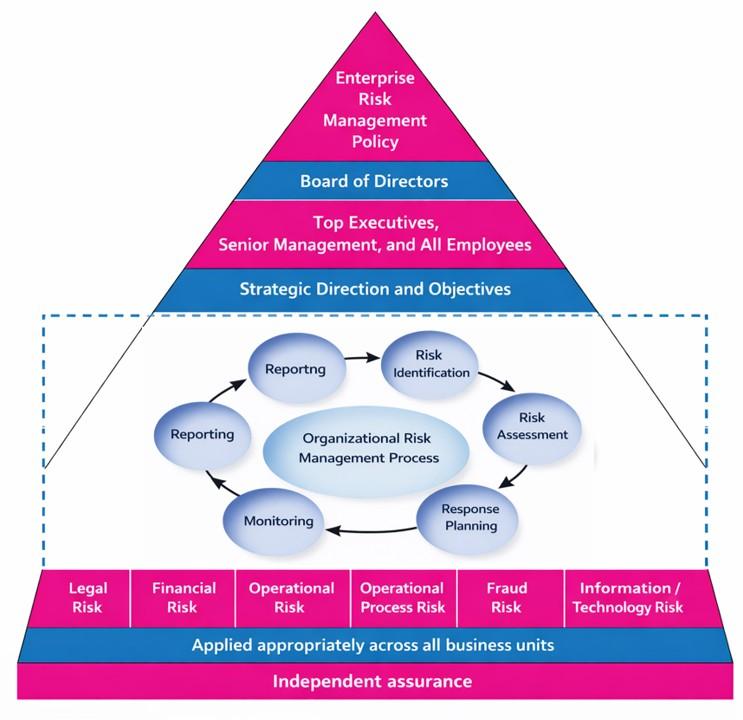
The company's risk management is under the control of the Board of Directors. The Board of Directors is responsible for establishing risk management policies that systematically and effectively cover all processes to mitigate impacts and events that could prevent the achievement of the organization's business objectives. The Board of Directors has established a Risk Management Working Group under the supervision of the Audit Committee, which is responsible for evaluating and setting policies for controlling, avoiding, and accepting the company's risks. Currently, the company's risk management references the COSO Enterprise Risk Management (COSO ERM) framework, which considers risks arising from both internal and external factors, and adheres to good corporate governance principles. Additionally, the Risk Management Working Group is responsible for business risk identification, assessment and analysis of significant risks, selecting risk management methods aligned with the organization's strategy, and implementing control activities appropriate to the assessed risk level or the company's acceptable risk tolerance. Risks for which management measures have been implemented include operational risk, compliance risk, and financial risk, among others.
Acceptable risk level
The Risk Management Working Group defines and communicates the company's acceptable risk levels, reviewed by the Board of Directors. The acceptable level depends on the choice between hypothetical risks and expected probabilities, serving as a guideline for management and employee operations, as well as the capacity for risk acceptance and management. The company's policy does not accept financial risks related to unreliable financial reports due to non-compliance with accounting standards, and risks arising from non-compliance with relevant laws/regulations.
Risk Management Process
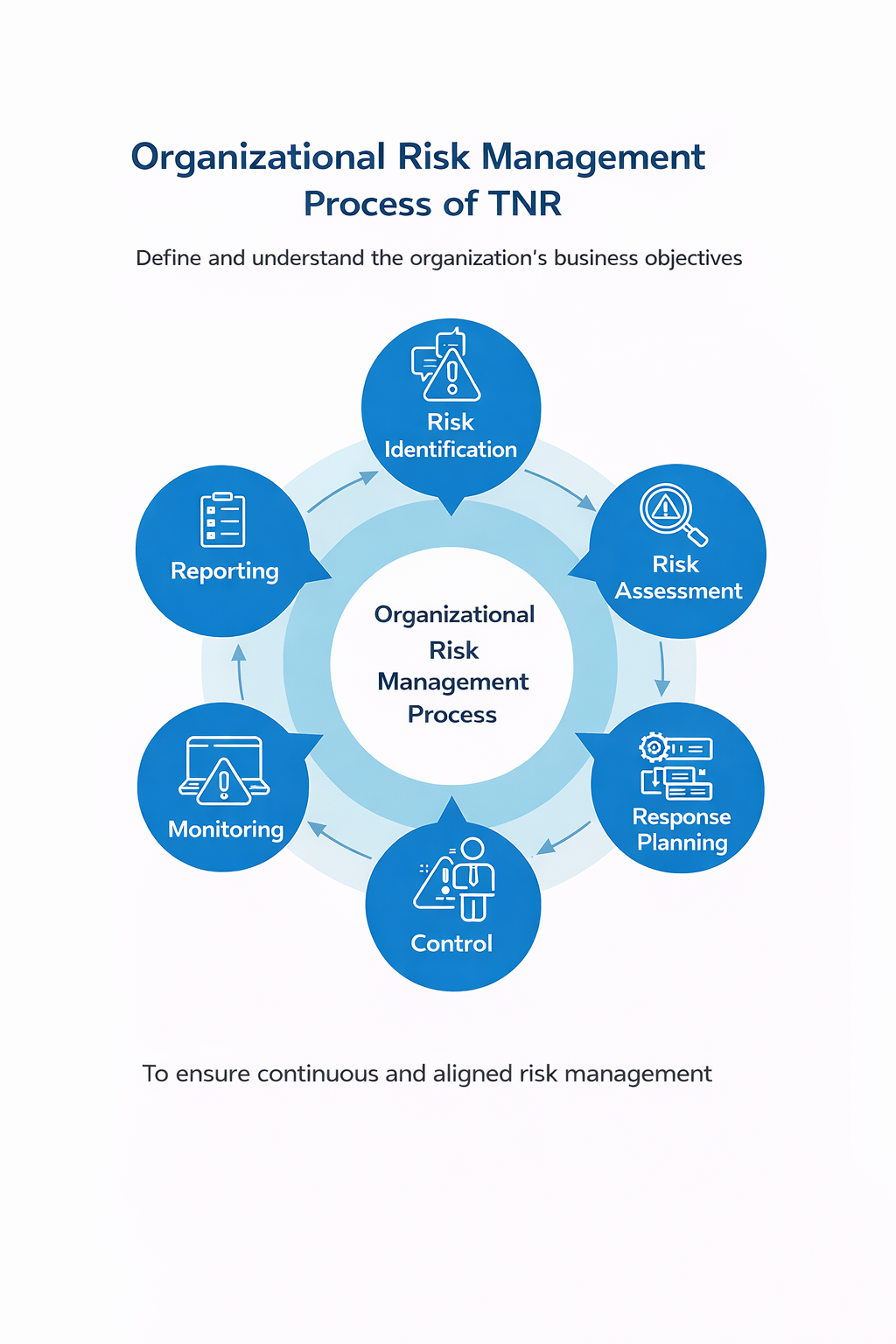
Risk management that impacts the achievement of organizational strategic objectives, including risks from operational departments, critical business decisions, and important routine operations, follows the process below:
Define objectives that support and align with the organization's mission and are consistent with the acceptable risk level.
Ensure comprehensive and timely risk identification, and assess the likelihood and potential impact or damage that may occur when such risks materialize.
Select risk control methods that align with the organization's risk appetite and risk tolerance, considering the expected costs and returns.
Monitor risks to ensure that the company's risks are managed appropriately and efficiently.
Policy Document Link
https://www.tnrcondom.com/storage/download/corporate-policies/20260216-tnr-risk-management-policy-th.pdf
Page Number in Report
1-2
Risk Factors — Overview
Risk Factors — Introduction
Risk Management
The Company has established a Risk Management Working Committee under the supervision of the Audit Committee to oversee and support the Company’s enterprise risk management processes.
The committee is responsible for identifying, assessing, and analyzing potential risks that may affect the Company’s business operations. It also formulates policies and appropriate measures to control, mitigate, avoid, or accept such risks within manageable levels.
The Company’s risk assessment framework covers various categories of risk, which can be summarized according to the following risk classifications:
Risks to the Company's Business Operations
Risk Register
| Risk Name | Risk Characteristics | Consequences | Management Measures | Related Risk Factors |
|---|---|---|---|---|
| Risk from competitive conditions in the condom manufacturing and distribution business | Risk from competitive conditions in the condom manufacturing and distribution business. The business of manufacturing and distributing condoms, both domestically and internationally, faces intense competition from both existing operators and new entrants who may compete in the market. These key competitors may possess strong financial capabilities, production capacity, and effective marketing strategies. | This intense competition may have a significant negative impact on the company's business operations, operating results, and financial position. | However, the company possesses strengths, namely: (1) The company has products under a strong, consumer-recognized brand, namely ONETOUCH. (2) Possesses high production capacity, making it one of the world's major manufacturers, and can produce high-quality condoms. (3) The factory's location offers a competitive advantage. (4) Capable of developing product innovations to meet customer needs. (5) Possesses the potential to build and develop machinery independently. and (6) Is a quality manufacturer, certified by domestic agencies and international organizations. These strengths enable the company to compete in the business of manufacturing and distributing condoms both domestically and internationally. (7) Given its qualification as a condom manufacturer, which is considered a medical device requiring prior authorization for operation, this serves as a barrier to new entrants. | 728 · Description: Volatility in the industry in which the company operates · Info category: STRATEGIC_RISK |
| Risk from the absence of long-term contracts with customers | Risk from the absence of long-term contracts with customers. The Company will not enter into long-term sales contracts (exceeding 5 years) with customers, which is in line with the general practice of operators in the condom manufacturing and distribution industry. Normally, the Company enters into distribution or agency agreements for products with a term not exceeding 5 years for the business of manufacturing and distributing condoms and lubricants under the Company's trademarks, and enters into sales contracts with a term not exceeding 5 years for the OEM business of manufacturing condoms and lubricants, and enters into sales contracts with a term not exceeding 1-5 years for the tender business. Therefore, the Company faces risks due to the absence of long-term contracts with customers, as customers may choose not to renew their contracts. | The Company may not be able to find new customers to replace them. The Company's business operations, operating results, and financial position may be significantly affected. | However, since condoms are medical devices, they are subject to relatively stringent domestic and international laws. The process of amending licenses requires a significant amount of time and considerable expense, which presents a limitation for customers who wish to change to a new manufacturer. Furthermore, as the company is a manufacturer of condoms that adhere to specified quality standards, it has cultivated a large number of long-term customers, boasting a client base across more than 100 countries worldwide. | 745 · Description: Loss or damage from non-compliance of partners or counterparties · Info category: OPERATIONAL_RISK |
| Risk from reliance on key executives and skilled employees | The company's success depends on its ability to attract and retain senior executives, key management, and employees with experience and expertise in production, marketing, and distribution, both domestically and internationally. The company regularly trains its employees because if it cannot retain its talented management team and employees or cannot find suitable replacements within a reasonable time. | significantly impacting the company's business operations and financial position. | However, the Company recognizes the importance of attracting and retaining human resources by focusing on developing the capabilities and responsibilities of its personnel. This includes promoting employee growth by clearly defining career paths at each level, as well as allocating compensation commensurate with each individual's knowledge and abilities and comparable to other operators. Employee benefits at all levels are regularly reviewed to ensure their appropriateness. Furthermore, new employees are continuously recruited to replace lost personnel and to ensure sufficient staffing in line with the Company's operational plans. | 738 · Description: Reliance on employees in key positions · Info category: OPERATIONAL_RISK |
| Risk from the inability to fully comply with the conditions of various licenses. | Currently, the Company has obtained various licenses and certifications necessary for product manufacturing. The Company will proceed with renewal applications as required by laws and regulations. However, as the standards for license renewal or such re-evaluation may change from time to time, the Company cannot guarantee that all such licenses and certifications can be renewed completely or in a timely manner. The inability to renew any license or certification that is critical to the business | significantly and negatively impact the Company's operational performance, financial position, and business opportunities. | In the past, although regulations, laws, and standards related to business operations both domestically and internationally have continuously changed, the Company has adjusted its production processes and business operations to comply with such changes. As a result, the Company is currently able to distribute its products without encountering difficulties in renewing important licenses. In addition, one of the Company’s executives serves as a qualified member of Technical Committee No. 473 on Condom Standards, enabling the Company to closely monitor trends and developments in relevant laws and regulations on an ongoing basis. | 756 · Description: Change in laws and regulations · Info category: COMPLIANCE_RISK |
| Risk from the inability to register or renew the registration of the Company's products in foreign countries | The Company's products are required to be registered with the regulatory authorities in each country where the products are sold. Therefore, if the distributors and/or local dealers in various countries are unable to register or renew the product registration for any reason, it may result in the Company being unable to sell its products in those countries. | may result in significant negative impacts on business operations, operating results, financial position, and business opportunities. | Nevertheless, although there are currently two medications, namely Pre-Exposure Prophylaxis (PrEP), which is used to prevent Human Immunodeficiency Virus (HIV) infection before exposure, and Post-Exposure Prophylaxis (PEP), which is used for individuals who are suspected of having been exposed to HIV within 72 hours, the use of condoms remains one of the most effective methods for preventing HIV infection. Condoms also provide effective protection against sexually transmitted infections at an affordable price accessible to consumers. | 756 · Description: Change in laws and regulations · Info category: COMPLIANCE_RISK |
| Risks from the development of treatment drugs or therapeutic vaccines for Human Immunodeficiency Virus (HIV) | In the future, should a cure or vaccine for the HIV virus be successfully developed, such a discovery | affects the demand for condoms and may have a significant negative impact on the company's operating performance and financial position. | Nevertheless, the Company continuously studies and monitors potential changes in laws and regulations in order to prepare for adjustments to its operations to ensure compliance with any such changes. At the same time, the Company regularly monitors and analyzes market conditions. | 732 · Description: Changes in technologies · Info category: STRATEGIC_RISK |
| Risk of changes in government policies, regulations, and rules affecting the Company's business operations. | The business of manufacturing and distributing condoms is subject to legal criteria and regulations from relevant key authorities, including the Medical Device Act B.E. 2551 ("Medical Device Act"), the Drug Act B.E. 2510 (and its amendments) ("Drug Act"), as well as related announcements and regulations from the Ministry of Public Health. Should laws or regulations from relevant authorities, or the conditions for compliance with various licenses, become more stringent | may result in increased costs for operational adjustments and may significantly affect the company's operational performance and financial position. | However, the Company has continuously studied and monitored potential changes in laws and regulations to prepare for operational adjustments in compliance with any forthcoming changes in laws and regulations, along with consistently studying market conditions. | 730 · Description: Government policy · Info category: STRATEGIC_RISK |
| Transportation and Export Risks | Risks that may arise from errors during transportation caused by the loading and shipping processes, which could create risks for exports. As exporting goods to foreign countries inherently involves a long transportation period, if damage occurs to goods due to such factors, it could impact the company. This also applies to exporting goods, even if logistics providers or export service providers closely monitor the goods during transit. However, if various natural disasters occur, which are beyond control. | The company may also be affected. Therefore, in the export of goods, errors during transportation arising from the loading and shipping processes could create risks for exports. This is because exporting goods to foreign countries inherently involves a long transit time. Consequently, should damage occur to goods due to such factors, | The Company has arranged transportation insurance with a reputable company to cover various risks that may arise. | 733 · Description: Business operations of partners in the supply chain · Info category: STRATEGIC_RISK |
| Risk from foreign currency exchange rate fluctuations | In 2024 and 2025, the Company generated revenue from overseas product sales of Baht 1,762 million and Baht 1,499 million, representing 89.27% and 86.93% of the Company’s total product sales revenue, respectively. The majority of condoms exported by the Company are sold in U.S. dollars, while most raw materials are procured domestically and paid for in Thai baht. Accordingly, if the U.S. dollar weakens, export revenue translated into Thai baht would decrease, which may have a material adverse impact on the Company’s operating results and financial position. | Prolonged uncertainty in trade policies may put pressure on economic growth. In addition, increased volatility in global financial markets may intensify domestic financial risks. Prolonged political uncertainty may also undermine market confidence and economic growth. These factors may adversely affect the Company’s export revenue and may also impact the Company’s operations and financial position. | However, the Company recognizes the risks arising from foreign exchange rate fluctuations and therefore has a hedging policy. The key points are: (1) To consider entering into forward foreign exchange contracts for at least 30% of the estimated business sales value from the annual budget prepared and approved by the Company's Board of Directors, and (2) During the year, the Company will closely monitor changes in exchange rates and continuously analyze their trends. In cases where the Thai Baht tends to appreciate by more than 10% compared to the standard exchange rate, the Company will consider entering into additional forward foreign exchange contracts for the unhedged portion. | 764 · Description: Fluctuation in exchange rates, interest rates, or the inflation rate · Info category: FINANCIAL_RISK |
| Computer Virus Risk (Virus computer) | Computer virus risks are a significant problem in today's digital world. Computer viruses are malicious software that can spread to computers and other devices through infected programs or files. Viruses can cause system malfunctions, steal personal data, or even destroy data on computers. In response to computer virus threats, over the past year, the company has implemented virus protection by installing antivirus software on both clients and servers. Firewall operations have been implemented to define policies that help prevent external attacks via applications, and external email screening, including restricting access to dangerous websites. Additionally, preventive maintenance is performed on all network systems, computers, and servers within the company every 3 months to ensure security and prevent virus infections between computers. Furthermore, the company has implemented data backup procedures for emergencies to prevent damage that may result from data theft or various incidents that could affect the company's critical system data. This also includes conducting emergency drills to prepare for such events. | Computer virus risks are a significant problem in today's digital world. Computer viruses are malicious software that can spread to computers and other devices through infected programs or files. Viruses can cause systems to malfunction, steal personal data, or even destroy data on computers. Responding to computer virus threats in response to computer virus threats. | The Company has implemented antivirus programs on both client computers and servers, with regular updates to ensure effective protection. In addition, employees are provided with training to exercise caution when downloading files from untrusted sources and are required to scan downloaded files using antivirus software before opening them. Employees are also advised to be vigilant when dealing with suspicious emails and links, particularly those from unknown senders. Furthermore, the Company has implemented firewall systems to prevent unauthorized external access and performs regular backups of critical data to mitigate the risk of data loss in the event of cyberattacks. The Company has also established a preventive maintenance plan for computers and servers, and conducts data restoration testing every three months in accordance with the established plan to ensure that data remains intact and that the Company can effectively respond to emergency situations. | 744 · Description: Information security and cyber-attack · Info category: OPERATIONAL_RISK |
| Hacking Risk | Hacking is a significant threat to data and computer system security. Hackers can access personal information such as names, addresses, credit card numbers, and other financial data, which may lead to identity theft and fraud. They can also delete or destroy critical data in computer systems, causing damage to businesses or individuals, and can take control of computer systems for misuse, such as sending spam or attacking other systems. There are also Distributed Denial of Service (DDoS) attacks, which render systems or websites unavailable by sending a large number of requests simultaneously, as well as gaining access to internal organizational networks to steal data or destroy internal systems. Responding to Hacking Threats In response to hacking threats over the past year, the company has analyzed and rectified cybersecurity vulnerabilities within the organization. We have implemented a Firewall system that helps prevent external attacks through applications The use of Virtual Private Network (VPN) systems, external email inspection and scanning, restriction of access to dangerous websites, and prevention of virus transmission between computers are also implemented. Furthermore, the company has established a Disaster Recovery (DR) site for data backup in emergency situations to prevent damage that may result from hacking, which could affect the company's critical system data. This also includes conducting annual emergency drills to be prepared for real-life scenarios. | Hacking is a significant threat to data and computer system security. Hackers can access personal information such as names, addresses, credit card numbers, and other financial data, which may lead to identity theft and fraud. They can also delete or destroy critical data in computer systems, causing damage to businesses or individuals. Furthermore, they can gain control of computer systems and misuse them, for instance, by sending spam or launching attacks on other systems. There are also Distributed Denial of Service (DDoS) attacks, which render systems or websites unavailable by sending a large number of requests simultaneously. This also includes accessing internal organizational networks and stealing data or destroying internal systems. | The Company prioritizes preventing system penetration risks in maintaining the security of data and computer systems. This includes the regular updating of antivirus and anti-malware programs to prevent attacks from viruses and malware that may enter the system. Software updates are performed, and operating systems and various software are regularly checked and updated to prevent vulnerabilities that could be exploited. Firewalls are activated to prevent unauthorized external access. Data encryption and data backup are implemented. Employees are trained and educated regarding data security and system penetration prevention, so that they possess the knowledge and ability to effectively prevent attacks. Furthermore, monitoring and surveillance are conducted by regularly checking computer systems to detect potential attacks and respond to them promptly. The Company has also established IT Security measures, conducts information technology risk assessments, and reviews them annually. This also includes the establishment of information technology security policies for the Company's systems, which are communicated to employees for widespread awareness and implementation. | 744 · Description: Information security and cyber-attack · Info category: OPERATIONAL_RISK |
| Risk of value-added tax refund requests from the Revenue Department, Ministry of Finance | The accounting department prepares monthly Value Added Tax (VAT) filing reports. In instances where input tax exceeds output tax, the accounting department submits a request to the Revenue Department for a VAT refund. A potential risk associated with tax refund requests is the possibility of bribery offered to government officials to expedite the refund process, thereby receiving the tax refund sooner than the prescribed timeframe. | Bribery of government officials is a means to expedite the receipt of tax refunds sooner than the prescribed timeframe. | Therefore, the Company has established procedures for VAT refunds for the accounting department, including a tax refund schedule and deadlines for submitting documents for advance inspection by Revenue Department officials, with strict control and supervision by the Head of the Accounting Department. Furthermore, the Company organizes annual training for the accounting department, which is responsible for developing accounting knowledge and skills for accounting employees. In 2025, training was provided Knowledge sources regarding tax refunds are compiled, and trained employees are tasked with communicating this information to staff within the accounting department. In cases where employees may not understand tax refunds, opportunities are provided for them to inquire with financial advisors, the local Revenue Department, or other knowledge sources, including organizing Knowledge Sharing sessions on tax refunds for accounting staff. | 730 · Description: Government policy · Info category: STRATEGIC_RISK |
| System and Infrastructure Failure Risk | The risk of system downtime or equipment failure is the possibility that an organization will incur damage due to the disruption or malfunction of technological infrastructure, which results in the inability to conduct business as usual. Incident Response The company has prepared an emergency response plan and an IT system recovery plan. In the event of a system failure, the company can switch operations to the backup system according to the defined procedures to ensure business continuity. The company has inspected the faulty equipment, analyzed the cause, and prepared a summary report to be used as information for system improvement. | Risk of system failure or equipment malfunction refers to the potential for an organization to incur damage due to the disruption or malfunction of technological infrastructure, consequently leading to an inability to conduct business as usual. | The company has implemented backup systems and redundancy for information technology equipment, including regular preventive maintenance. Furthermore, the company has provided backup power systems and periodically tested system recovery plans to ensure effective handling of emergency situations. | 744 · Description: Information security and cyber-attack · Info category: OPERATIONAL_RISK |
| Risks from using Virtual Private Network (Virtual Private Network: VPN Risk) | Risks associated with Virtual Private Network (VPN) usage refer to the potential for damage to data or network systems through the virtual connection channels created. Although VPNs are designed to enhance security through data encryption, if not properly managed, they can become a "backdoor" that malicious actors exploit to infiltrate internal organizational systems. Incident Response The company has officially established incident response procedures related to VPN usage. Upon detecting anomalies, such as login attempts from unauthorized sources, multiple failed login attempts, or VPN usage that violates policy, the company immediately suspends the connection or deactivates the associated user accounts. Furthermore, the company has assigned the Information Technology department to review VPN usage logs, analyze the scope and impact of incidents, and implement appropriate security configuration adjustments. Additionally, a summary report of the incident is prepared and submitted to management for consideration. | Risks associated with using a Virtual Private Network (VPN) refer to the potential for damage to data or network systems through the established virtual connection channels. Although VPNs are designed to enhance security through data encryption, if not managed adequately, they could become a "secret backdoor" that malicious actors might exploit to infiltrate the organization's internal systems. | The company has officially established a VPN system usage policy, clearly defining its objectives, scope, and terms of use, and restricting VPN access solely to those whose job functions necessitate it. Furthermore, the company has enforced Multi-Factor Authentication for all VPN connections, established password strength standards, and restricted access to internal systems based on the principle of Least Privilege. The company continuously records and monitors VPN usage, periodically reviews VPN user accounts, and immediately revokes access rights when an employee's employment is terminated or when VPN usage is no longer necessary.
Objectives and Scope to ensure that the information technology systems of Thai Nippon Rubber Industry Public Company Limited, hereinafter hereinafter referred to as "the Company," are appropriate, efficient, secure, and capable of continuous operation, as well as preventing problems that may arise from improper use or threats to information technology systems. Therefore, it is deemed appropriate to establish an Information Technology System Security Policy by setting standards. (Standard) Guidelines ( Guideline) Operating Procedures ( Procedure) to cover the security of information technology systems and prevent various threats, with the following objectives and guidelines: 1. to ensure confidence and security in the use of the company's information technology systems or computer networks, enabling efficient and effective operations. 2. defining the scope of information technology system security management and communication and continuous improvement. 3. to establish standards, guidelines, and procedures for executives, officers, system administrators, and external personnel to recognize the importance of maintaining security in the use of the company's information technology systems during operations. and strictly adhere to them. | 744 · Description: Information security and cyber-attack · Info category: OPERATIONAL_RISK |
| Risk of Data Privacy | The company operates a business in the manufacturing and distribution of condoms and lubricants. This involves coordination with customers, business partners, distributors, and stakeholders, both domestically and internationally, which may entail the collection, use, and disclosure of personal data. This includes, but is not limited to, business contact information, employee data, commercial customer data, as well as data related to transactions, transportation, and after-sales services. The company is obligated to comply with relevant personal data protection laws and regulations, such as Thailand's Personal Data Protection Act B.E. 2562 (2019) (PDPA), as well as personal data protection laws and regulations of partner countries, for instance, the European Union's General Data Protection Regulation (GDPR), and any other laws that may be amended or additionally enforced in the future. | If the company fails to fully comply with such laws and regulations, or if personal data breaches occur, are accessed without authorization, or are used inappropriately, this may result in the company facing legal penalties, fines, civil liability, or restrictions on business operations in certain countries. Furthermore, it could impact its reputation and the trust of customers, partners, and investors, potentially leading to adverse effects on the company's operational performance and financial position. | The company has systematically established personal data protection risk management measures, with the following key guidelines: 1. Policy-setting measures and governance structure The company has established a personal data protection policy and practices that comply with the Personal Data Protection Act B.E. 2562 (2019), as well as the personal data protection laws of partner countries, clearly defining the roles, duties, and responsibilities of relevant departments. 2. Risk Assessment Measures The company identifies personal data collected, used, and disclosed in all work processes and assesses the risks that may lead to personal data breaches, considering the severity and likelihood of such risks, to prioritize and establish appropriate control measures. This also includes maintaining a record of data processing activities and regularly reviewing risk assessments. 3. Data Access Control and Restriction Measures The company appropriately defines personal data access rights based on employees' duties and responsibilities, utilizing both physical and technical security control measures such as password setting, identity verification, and restricting access to documents or systems, to prevent unauthorized access, use, or disclosure of information. 4. Data Storage, Use, and Disclosure Measures The company collects, uses, and discloses personal data only as necessary and in accordance with legitimate purposes, clearly informing data subjects of the details and obtaining consent as required by law. Appropriate data retention periods are established, and data is destroyed or anonymized upon expiration of the specified period to prevent inappropriate use of the information. 5. Data Processor Management Measures The company establishes criteria and conditions for selecting and overseeing personal data processors by preparing agreements or contracts that clearly define duties, responsibilities, and personal data protection measures. Compliance with these requirements is regularly monitored and evaluated to ensure that data processing adheres to legal requirements and the company's established standards. 6. Knowledge Development and Awareness Building The company regularly provides communication and training to employees to foster understanding and awareness of compliance with personal data protection laws and policies. 7. Data Breach Management Measures The company has clearly defined plans and procedures for responding to personal data breaches to ensure timely detection, reporting, control, and resolution of situations. This includes establishing internal reporting channels, notifying relevant authorities and data subjects within legally prescribed timeframes, as well as analyzing causes and improving preventive measures to avoid recurrence. 8. Continuous Monitoring, Inspection, and Improvement The company continuously monitors, inspects, and reviews personal data protection measures to align with changes in laws, technology, and international business practices. | 758 · Description: Violations of laws and regulations · Info category: COMPLIANCE_RISK |
| Risks from climate change | Currently, climate variability events have become increasingly severe and evident and affect the operation of business operations more significantly. This includes extreme heat, severe cold, frequent strong winds, heavier-than-usual rainfall, or even unprecedented cold weather. These phenomena result in droughts, floods, and various ecological changes. These events are caused by various factors, including global warming (Climate Change), deforestation, greenhouse gas emissions, and industrial pollution, leading to unavoidable environmental problems. Consequently, manufacturers across all supply chains are focusing on actions to reduce greenhouse gas emissions and waste generation, increase the use of renewable resources through greater reuse, and establish traceable business processes within the value chain. For instance, products must not originate from deforestation, must have environmentally friendly production processes, and must not be associated with unethical environmental or social practices. In the past, stringent regulations and new standards have been established by various agencies, such as the European Union Deforestation Regulation (EUDR), to drive changes in consumer behavior and production practices towards greater environmental awareness. These events may impact the Company's operations, including raw material shortages, water scarcity due to droughts, and prolonged dry spells resulting from climate variability. Furthermore, there is a risk of floods, which could affect the transportation of various raw materials or the delivery of finished products to customers, as well as the commute of employees to the Company's factories. Moreover, if governments or international trade bodies impose strict controls on greenhouse gas emissions and waste discharge, whether through new regulations, carbon taxes, or any other related additional costs, the Company may need to invest more than initially planned in its business strategy to manage and control such greenhouse gas emissions and waste. Additionally, if the Company fails to comply with the specified timelines and quantities set by relevant authorities, the Company may face increased expenses or higher operating costs. | The increasing severity of climate change may lead to business disruptions from floods, droughts, and Shortage of raw materials (latex), which can also cause damage to property and employee safety. The company's image and credibility due to greenhouse gas management operations not meeting set targets, and the operating costs of The company's costs have increased due to environmental operational policies, whether it is the adoption of new technologies in production processes or the reduction of various pollutants. If operations do not comply with new regulations that will be enforced, natural rubber condoms cannot be distributed to certain market segments, which may cause the company to lose business opportunities. | Risk Management Methods To align with the overall supply chain goals, reduce greenhouse gas emissions contributing to climate change, and expand operations into future value chains, the Company has implemented the following measures: 1. Establish policies and operational frameworks to support investment in low-carbon projects and enhance efforts to reduce greenhouse gas emissions, such as utilizing various renewable energy sources, including solar power, to decrease energy consumption and greenhouse gas emissions. 2. Develop a carbon footprint, identify significant emission sources, and implement measures to reduce the Company's greenhouse gas emissions, such as energy management to enhance production efficiency. 4. Monitor performance, review strategies and greenhouse gas reduction targets, and continuously update operations to comply with policies, regulations, and requirements. 5. Secure sufficient funding to meet the financial needs for developing and supporting operations aimed at reducing greenhouse gas emissions in line with the Company's targets. | 1719 · Description: Climate change and disasters · Info category: STRATEGIC_RISK |
| Geopolitical Risk | From the past to the present, international conflicts have shown a continuous and escalating trend, encompassing both religious, ethnic, economic, and historical conflicts. Such events could lead to international wars (both armed conflicts and trade wars) and may affect the company's exports, sales, revenue, production costs, and transportation. | 1.International or religious political conflicts 2.Trade wars | The Company has analyzed various internal and external risk factors to identify significant impacts on business operations from various geopolitical risks, whether international conflicts, religious disputes, or even trade wars. By studying, researching, and closely analyzing data from various sources, especially in countries where the Company has sales, to establish assumptions, possibilities, management approaches, and business strategies to enable adaptation and effective response to stakeholder expectations.
| 1717 · Description: ESG risk · Info category: STRATEGIC_RISK · 752 · Description: Impact from population structure · Info category: OPERATIONAL_RISK |
| Risk of greenhouse gas emission reduction and energy management not being implemented as planned. | The impact of greenhouse gas emissions leads to climate change, which gives rise to various physical risks such as floods and droughts. These significantly affect business operations, for instance, businesses may be disrupted due to shortages of critical raw materials and water scarcity in production processes. Therefore, the Company supports the reduction of greenhouse gas emissions. Should the Company fail to reduce greenhouse gas emissions as stipulated, it may affect stakeholder confidence and the Company's reputation, and expenses may increase due to laws related to carbon taxes. Furthermore, energy management is another method that helps reduce greenhouse gas emissions, such as using energy-efficient equipment, improving operational processes, and utilizing solar energy. |
|
| 1715 · Description: Economic risk · Info category: STRATEGIC_RISK · 1717 · Description: ESG risk · Info category: STRATEGIC_RISK · 1719 · Description: Climate change and disasters · Info category: STRATEGIC_RISK |
Risks to Securities Holders' Investment
Risk Register
| Risk Name | Risk Characteristics | Consequences | Management Measures | Related Risk Factors |
|---|---|---|---|---|
| Risk from a major shareholder having influence over the determination of management policies. | Following this offering of ordinary shares, the Dararattanaroj family will hold shares in the company, both directly and through Charoen Aksorn Holding Group Co., Ltd. C.A.S. CLEAN ENERGY CO., LTD. and CMS Holding Co., Ltd. together hold 78.31 percent. of the total issued and paid-up shares. The Dararattanaroj family will continue to serve as authorized directors and executives of the company. Consequently, the Dararattanaroj family, as major shareholders and executives, will have the power to control the management of the company, including the ability to control almost all voting at shareholder meetings, whether for the appointment of directors or for resolutions requiring a majority vote of the shareholder meeting. This excludes matters where laws or the company's articles of association require a 3/4 vote of the shareholder meeting and votes in which the Dararattanaroj family has a conflict of interest. Therefore, other shareholders may not be able to gather sufficient votes to scrutinize and counterbalance proposals made by the Dararattanaroj family. | Other shareholders may therefore be unable to accumulate sufficient votes to scrutinize and counterbalance the matters proposed by the Dararattanaroj family. | However, given the company's management structure, comprising the Board of Directors, the Audit Committee, the Nomination and Remuneration Committee, and the Executive Committee, with each committee having clearly defined scopes of authority and responsibilities, this ensures the company's transparency in management and a verifiable system. Currently, the company has a total of 3 independent directors, of whom 2 serve as audit committee members to act as a mechanism for overseeing the Board's operations. In addition, the company has established guidelines regarding connected transactions or transactions involving directors, major shareholders, controlling persons, as well as individuals who may have conflicts of interest. Such individuals shall not have the authority to approve and shall not have voting rights in the approval of such transactions. | 2969 · Description: Risk of the company having a majority shareholder holding > 50% of shares · Info category: HOLDER_RISK |